When I first launched this website, I took an informal online survey about the blog. The few writers who responded said they were interested in a blog that included writing tips. To honor this request, as part of this series on lessons I’ve learned during 18 years of the writing life, I will share some technical revision tips that have greatly improved my final drafts. (I will switch back and forth between technical posts and more general thoughts on the writing life.) These revision techniques are focused on prose; poetry revision is a different skill that is beyond what I consider my expertise.
Note that I mention “revision” tips. Most first drafts contain grammatical errors or sentences that can be improved (along with everything from structure to setting to description to plotting that all can be reconsidered). This is the reason first drafts are often called “rough drafts.” I tell my students that a first draft for a writer is like a lump of clay for a potter: a potter can shape a lump of clay into a vase or a pot or whatever the potter chooses. Without that clay, there is nothing to work with. The same is true of first drafts.
Of course, writers can learn extensive revision details from many books or courses (think The Elements of Style by Strunk and White, for example). I will not attempt an exhaustive list of rules or tips on this blog. I have found, however, that a few basic revision skills make a dramatic difference when I am revising a rough draft.
An important caveat: there are exceptions to every rule. Writers have different voices and styles, some of which break conventions for the writer’s own reasons. Even within styles there can be reasons to stray from “rules” (such as when writing realistic dialogue). In the end, a writer has to make decisions that feel right for a particular piece.
Caveat aside, the first suggestion I will offer is one based in grammar: When revising a first draft, whenever you come across a pronoun or vague word, try to be more specific.
The pronouns I am concerned with here are demonstrative pronouns (“this,” “that,” “these,” “they,” “those”) as well as other vague words such as “it” (which is not a pronoun).
The easiest way to explain this concept is to give examples.
The first time I wrote the sentence above, I wrote, “The easiest way to explain this is to give examples.” If I had left the sentence that way, a reader might ask, “explain what?”
Realizing this mistake in revision, I added the word “concept” to be more specific.
A good rule of thumb: if you can ask “what?” when you encounter a pronoun or vague word, you can probably be more specific.
Below are some examples:
- This was challenging to write. (What was challenging to write?)
This blog post was challenging to write.
- That was wonderful! (What was wonderful?)
Walking in the woods was wonderful.
- These are delicious. (What are delicious?)
These strawberries are delicious.
- Did you eat all of those? (Eat all of what?)
Did you eat all of the strawberries?
- It was cloudy today. (What was cloudy?)
The sky was cloudy today.
This concept seems obvious, right? You might be surprised, however, at how often you use pronouns or vague words in early drafts, because in your mind you know what you are talking about. Your reader might not know, however – and even if the meaning of your pronoun is obvious, replacing that pronoun adds more specific and interesting nouns to your prose.
The same idea works with vague nouns such as “thing” or “what.” If you notice “thing” or “what” in your sentence, examine the sentence carefully to determine if you can be more specific. Below are two examples:
He considered the things he saw in the museum.
or
He considered what he saw in the museum. (What did he see?)
He considered the sculptures he saw in the museum.
A lot of things annoyed him. (What “things” annoyed him?)
The professor’s droning voice, the pace of the class, and the difficulty of the material annoyed him.
Another hint: You can be more specific and less wordy if you spot a pronoun combined with the word “thing” or “what.” For example:
That was the thing he was trying to describe. or That was what he was trying to describe.
He was trying to describe his sadness.
Once you start looking at any tip related to writing, you can lead yourself down the proverbial rabbit hole. Look at us – we’re already talking about wordiness. I will stop here.
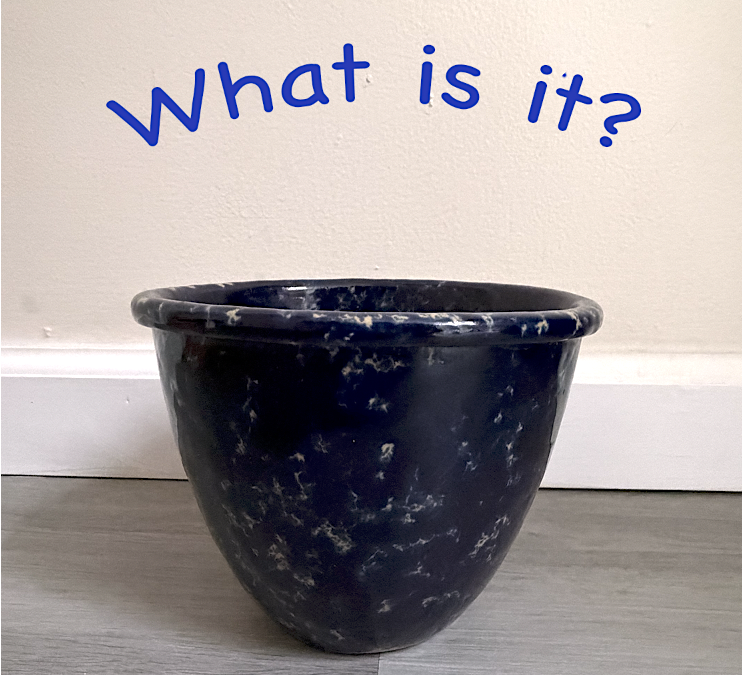
Now, try it!
I meant: Now try replacing your pronouns or vague words with more specific nouns!
Love this, Faye, I catch myself doing it all the time. Oops, let me rephrase that: Love the post, Faye, I catch myself using vague words and pronouns so often. I believe you are right that we use vague wording because we know what we mean in our own heads. Sometimes, context allows clarity but not often.
You’ve clearly picked up the skill, Cindy!